
The short version
- Timing
- Flags count, sounds don't. Time everything from the moment a flag goes up or comes down. A late or missing horn changes nothing.
- Your start
- Your class flag goes up at five minutes. P, I, Z, U or black at four. That flag comes down at one. Your class flag comes down at the start.
- Several classes
- Classes start one after another, usually every five minutes. Watch for your own class flag and time from that, not from the first horn of the day.
- Trouble
- X: someone's over. First Substitute: everyone back, start again. AP: wait. N: race abandoned. S: course shortened.
- The course
- Read the course board before your warning signal. The sailing instructions say what its letters and numbers mean.
This is a reference for the flags you'll see at a club race. It follows the Racing Rules of Sailing 2025–2028 (RRS), which list every standard signal on a page called Race Signals. New to racing? Start with your first race, then come back here.
How to read race signals
The race committee talks to you with flags and sounds. Three things make it easy to read.
- The flag is the signal. The sound only gets your attention. Rule 26 says start times are taken from the flags, and a missing sound is ignored. Sound travels slowly and horns fail. Watch the flags.
- "Displayed" and "removed" both matter. A flag going up is a signal. The same flag coming down is often a second signal. At one minute to go, nothing goes up: the preparatory flag comes down.
- A flag over a class flag is for that class only. AP above your class flag postpones your class. AP on its own postpones every race not yet started.
The number of sounds tells you roughly what kind of signal is coming before you've found the flag:
- One sound: an ordinary step. Warning, preparatory and starting signals, an individual recall, AP or N coming down, and Y (wear life jackets).
- Two sounds: something stops or changes. A postponement (AP), a general recall (First Substitute), or a shortened course (S).
- Three sounds: a race is abandoned (N).
- One long sound: one minute to your start.
- Repeated sounds: a change on the course, such as C (the next mark has moved) or M (a boat is standing in for a missing mark).
The sailing instructions (SIs) can add signals of their own, and they name your class flag. The Race Signals meanings themselves can't be changed by the SIs (rule 25.2). Rule 25.3 also lets the committee use "a flag or other object of a similar appearance", so a board painted like a flag counts.
Flags for the start
The standard start is five minutes long, with four signals (rule 26). The SIs can change the times, but five minutes is what most clubs use.
| Time to go | Flag | Up or down | Sound | What it means |
|---|---|---|---|---|
| 5:00 |  | Class flag up | One | Warning signal. Your sequence has begun. Start your timer. |
| 4:00 |  | P, I, Z, U or black up | One | Preparatory signal. You are now racing, and the right-of-way rules apply. |
| 1:00 | Preparatory flag down | One long | One minute. I, Z, U and black now bite. | |
| 0:00 | Class flag down | One | Starting signal. Go. |
If you hear a horn but the flags don't move, nothing has happened yet. If a flag moves and there's no horn, the signal still counts.
The class flag
Each class or fleet has its own class flag, set in the SIs. It might be a letter flag such as D or E, a numeral pennant, or a flag with the class's own emblem on it. At a small club everyone may share one. Find yours in the SIs before you go out, and look at the real flag on the committee boat while you warm up.
The preparatory flag, and what it does to an early boat
The flag that goes up at four minutes is the preparatory signal. Which one the committee picks decides what happens to a boat that's early (rules 29 and 30).
| Flag | Name | If you're early |
|---|---|---|
| P | The usual one. If you're over the line at the start, go back to the pre-start side and start again (rule 29.1). |
 | I | If you're on the course side of the line or its extensions in the last minute, you must go back around one end of the line before you start (rule 30.1). Dipping back across the line doesn't count. |
 | Z | Being in the triangle formed by the two ends of the line and the first mark in the last minute costs a 20% scoring penalty, without a hearing. It sticks even if the race is restarted, and a second offence in a restart adds another 20% (rule 30.2). |
 | U | Being in that triangle in the last minute means disqualification, without a hearing. If the race is restarted, you can sail the restart (rule 30.3). |
 | Black | The same triangle, the same disqualification, but it sticks through a restart. If there's a general recall, the committee shows your sail number before the next warning signal and you may not sail the restart. Sail it anyway and that disqualification can't be your discard (rule 30.4). |
Z and I can be flown together. Z, U and black don't count against you if the race is postponed or abandoned before the start.
You'll see P most weekends. The others usually appear after a general recall, when the fleet has shown it will push the line. The start lesson covers how to time your approach under any of them.
When several classes start
Most regattas, and many club nights, start more than one class from the same line. They go one after another. Rule 26 says each class's warning signal is made with or after the starting signal of the class before it. Most committees run them back to back: the moment one class starts, the next class's flag goes up. One five-minute sequence follows another, every five minutes. People call this a rolling start.
How to get it right:
- Know your order. The SIs list the classes in starting order and name each class flag. Second in line means your warning comes with the first class's start.
- Watch for your flag, not the horn. Horns sound every minute or so for half an hour at a big event. The only signal that starts your timer is your own class flag going up.
- Check it's yours. A preparatory flag goes up for every class in turn. P at the start of the day isn't your P if your class flag isn't flying.
- Stay clear while others start. Keep out of the way of the line and the first few hundred yards of the course while other classes are in their last minutes. Many SIs require it, and boats that aren't racing must not interfere with boats that are, if they reasonably can (rule 23.1).
A general recall shuffles the order. The recalled class gets a new warning signal one minute after the First Substitute comes down, and every class after it moves back (rule 29.2). The SIs sometimes send a recalled class to the back of the queue instead. Re-read the flags, and start your timer again from your class flag.
Recalls
| Flag | Name | Sound | What it means |
|---|---|---|---|
 | X | One | Individual recall (rule 29.1). One or more boats were over at the start, or broke the I flag rule. The rest are racing. X stays up until every such boat has gone back, but no longer than four minutes, or one minute before the next class's start. The committee doesn't have to hail you. |
 | First Substitute | Two | General recall (rule 29.2). The start is cancelled for that class. A new warning signal comes one minute after the pennant comes down (one sound). |
Under X, if you think it might be you, it probably is. Go back completely to the pre-start side of the line, keeping clear of everyone while you do (rule 21.1), then start. Many committees also call the sail numbers of boats over the line on the VHF channel in the SIs. That's a courtesy, and a missed call doesn't excuse you.
Postponing and abandoning
Postpone means "not yet": a race that hasn't started is held. Abandon means "this race doesn't count": it is stopped, and it may be sailed again later.
| Flag | Signal | What it means |
|---|---|---|
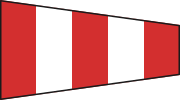 | AP | Postponed. Races not yet started are postponed (two sounds). When AP comes down (one sound), the next warning signal follows one minute later. Stay close and watch the committee boat. |
 | AP over H | Postponed. Further signals ashore. Go in and watch the club's flagpole. |
 | AP over A | Postponed. No more racing today. |
 | AP over a numeral pennant | Postponed by that many hours, 1 to 9, from the scheduled start time. AP over 1 is one hour. |
 | N | Abandoned. All races in progress are abandoned (three sounds). Go back to the starting area. The new warning signal comes one minute after N comes down. |
| N over H | Abandoned. Further signals ashore. |
| N over A | Abandoned. No more racing today. |
"Over" means one flag flown directly above the other on the same line. Either can be flown over a class flag to apply to that class only.
What changed in 2025. The N signals now abandon races in progress, where they used to say races that had started. Rule 27.3 now also lets the committee use N before the starting signal, as well as AP. US Sailing's race-management guidance reads "in progress" as any race whose sequence has begun. In practice: N while you're still counting down abandons your sequence, and you'll get a fresh one. A storm call can now mix the two on one mast, N over H for classes already racing and AP over H for classes still waiting.
Flags while you're racing
| Flag | Name | What it means |
|---|---|---|
 | S | Course shortened (rule 32.2, two sounds). Shown before the first boat finishes. At a rounding mark, the finish line is between that mark and the boat flying S. It can also be a line the course already crosses, or a gate. |
 | C | The next mark has moved (rule 33, repeated sounds). Shown at the mark that starts the leg, with a new compass bearing, a green triangle (moved to starboard) or a red rectangle (moved to port), or a "–" or "+" for a shorter or longer leg. Later legs can change to keep the course shape without another signal. |
 | M | This boat is the mark. A mark has gone missing, and the object flying M replaces it (rule 34). Round it as you would the mark. |
 | L | Ashore: a notice to competitors has been posted. Read the board. Afloat: come within hail of this boat, or follow it. |
 | Y | Wear a life jacket (rule 40, one sound). Shown no later than the warning signal. Many SIs simply require one at all times. |
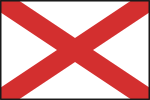 | V | Listen for safety instructions (rule 37, one sound). Everyone, racers and support boats alike, monitors the committee's radio channel for search and rescue calls. |
 | O | Pumping, rocking and ooching allowed, but only in classes whose rules permit it above a set wind strength (Appendix P5). Flown before or with the warning signal, or at a mark once you're racing. Flag R takes it back. Most club racing never uses it. |
 | Orange | The staff flying it is one end of the starting line. Usually the committee boat; sometimes the pin boat too. |
 | Blue | The staff flying it is one end of the finishing line. Seeing it is the sign the finish boat is ready. |
Orange and blue are flown without a sound. The SIs can add more: a red or green flag for which side to leave the marks, or a class flag at the finish.
The course board
Before your warning signal the committee must show the course, unless the SIs already fix it (rule 27.1). Most clubs do this on a course board on the committee boat: letters and numbers, or numeral pennants on a halyard. The meaning is whatever the SIs say. There's no universal code, but a few patterns are common:
- A letter for the shape and a number for the laps. "W2" might be windward-leeward, twice around. "T" might be a triangle, "O" an outer loop, "L3" three laps of a course the SIs call L. Look these up; they vary from club to club.
- Numeral pennants for a course number. Pennant 2 might mean course 2 from a list in the SIs.
- A compass bearing to the first mark, in degrees, when the windward mark is laid for the day's wind.
- Mark colors. The SIs say which buoys are the marks, and often give a different color for a mark moved under flag C.
| Pennant | Number | Pennant | Number |
|---|---|---|---|
| 1 |  | 2 |
 | 3 |  | 4 |
Read the board during your warm-up, again before your class flag goes up, and say it out loud to your crew. Note the number of laps, and which way round the marks go. A wrong course is the most avoidable way to lose a race. If you can't read it, sail close to the committee boat's stern and ask, well before your sequence. Course types shows the shapes the letters usually stand for.
Quick-reference card
Every flag on one card. Print this section or screenshot it for your phone pouch.
| Flag | Name | Means |
|---|---|---|
| Class flag | Up: your warning signal (5:00). Down: your start. |
| P | Preparatory (4:00). Over early: go back. |
| I | Over in the last minute: go round an end. |
| Z | In the triangle in the last minute: 20% penalty. |
| U | In the triangle in the last minute: disqualified (may sail a restart). |
| Black | In the triangle in the last minute: disqualified, out of any restart. |
| X | Individual recall: someone is over. |
| 1st Sub | General recall: new warning 1 minute after it comes down. |
| AP | Postponed. Warning 1 minute after it comes down. |
| … over H | Further signals ashore. |
| … over A | No more racing today. |
| N | Races in progress abandoned. Back to the start. |
| S | Course shortened. Finish at this mark. |
| C | Next mark moved. |
| M | This boat replaces a missing mark. |
| L | Ashore: notice posted. Afloat: come within hail. |
| Y | Wear a life jacket. |
| V | Monitor the radio for safety instructions. |
| O | Pumping allowed (only where class rules say). |
| Orange | One end of the start line. |
| Blue | One end of the finish line. |
Sounds: one for a step, two for a stop or change, three for abandoned, one long for the minute.
Doing it with Sail Tactician
The flags tell you when; Sail Tactician keeps the time. A few details for when the sequence doesn't go to plan:
- General recall or postponement? Cancel with the red ✕ (it asks first), then start again when your class flag goes back up.
- A different sequence? The countdown length is set in whole minutes on the watch, or in Setup's Timer screen on the phone. Set 0 to start recording straight away.
- One class at a time. The timer counts down to one start. It doesn't run a multi-class sequence, so the class flag is still your cue.
Questions
Which flag starts a sailboat race?
Your class flag. It goes up at five minutes to go (the warning signal) and comes down at the start. In between, the preparatory flag (usually P) goes up at four minutes and comes down at one minute.
What does the P flag mean in sailing?
P is the preparatory signal, four minutes before the start. From then on you're racing. If you're over the line at the start under P, go back to the pre-start side and start again.
What does the AP flag mean?
AP, the answering pennant, means races that haven't started are postponed. When it comes down, the next warning signal follows one minute later. Over H it means further signals ashore; over A, no more racing today; over a numeral pennant, a delay of that many hours.
What is the difference between X and the First Substitute?
X is an individual recall: some boats were over and must go back, and everyone else is racing. The First Substitute is a general recall: the whole start is cancelled, and a new warning signal comes one minute after it comes down.
How do I know when my class starts if there are several?
Find your class flag and starting order in the sailing instructions. Classes usually start every five minutes, with each class's warning signal made at the previous class's start. Start your timer when your own class flag goes up.
Do I time the start from the horn or the flag?
The flag. Rule 26 says times are taken from the visual signals, and a missing sound is ignored.
Sources
The Racing Rules of Sailing 2025–2028 (World Sailing), Race Signals and rules 21.1, 23.1, 25, 26, 27, 29, 30, 32, 33, 34, 37 and 40 and Appendix P5, described here in our own words. Changes since 2021–2024 from US Sailing, "Changes to RRS 2025–2028 that affect Race Admin" (December 2024). Flag designs drawn by Sail Tactician from the International Code of Signals. Course-board conventions are common club practice; the sailing instructions always decide. Sail Tactician behaviour from the in-app User Guide, version 3.2.
What changed
- First published.
Put a racing instrument on your wrist.
Start line, wind shifts and VMG at a glance, and a coach in your pocket afterwards. Free to download for Apple Watch and iPhone, with the full debrief on your first five races.
Download on the App Store